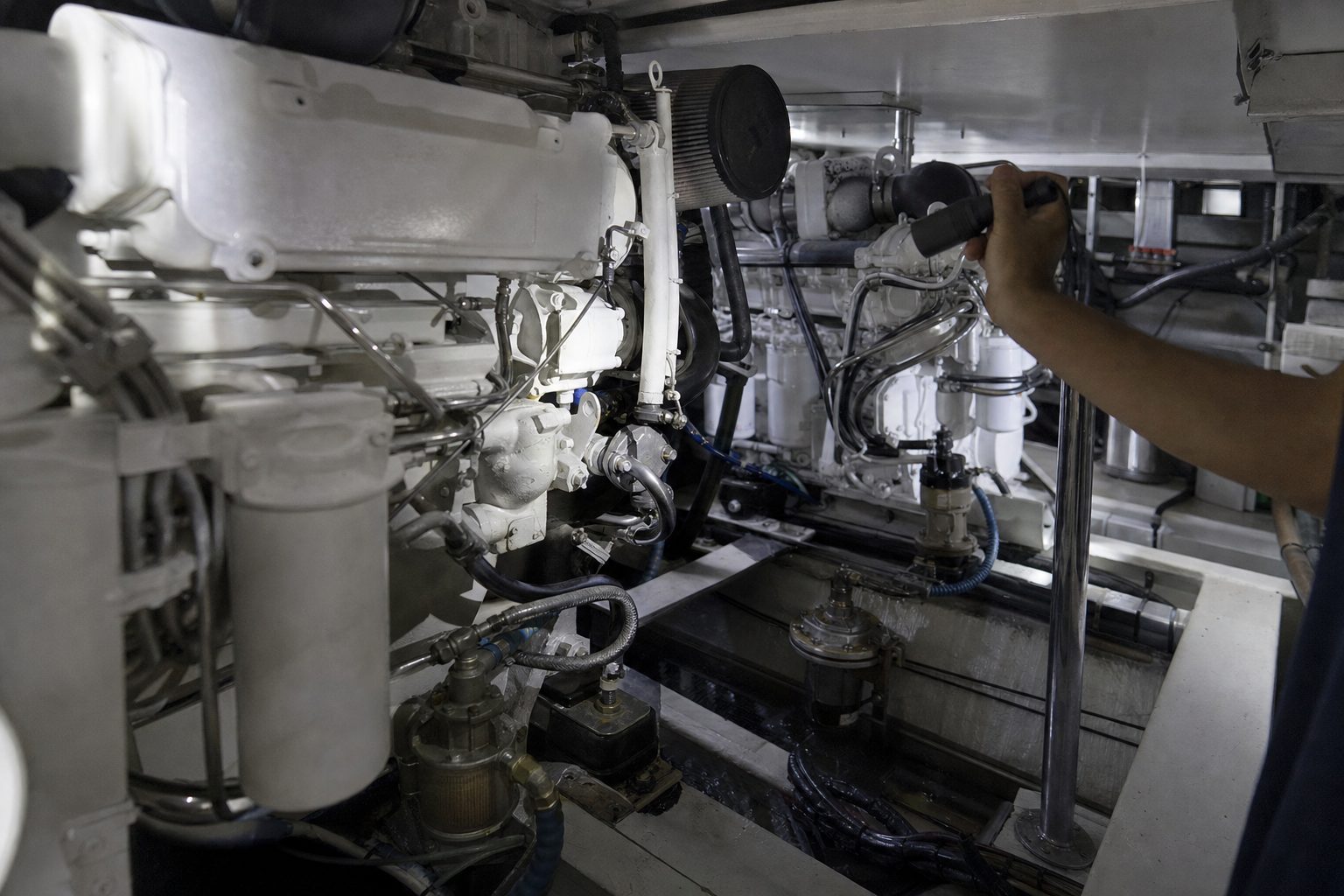
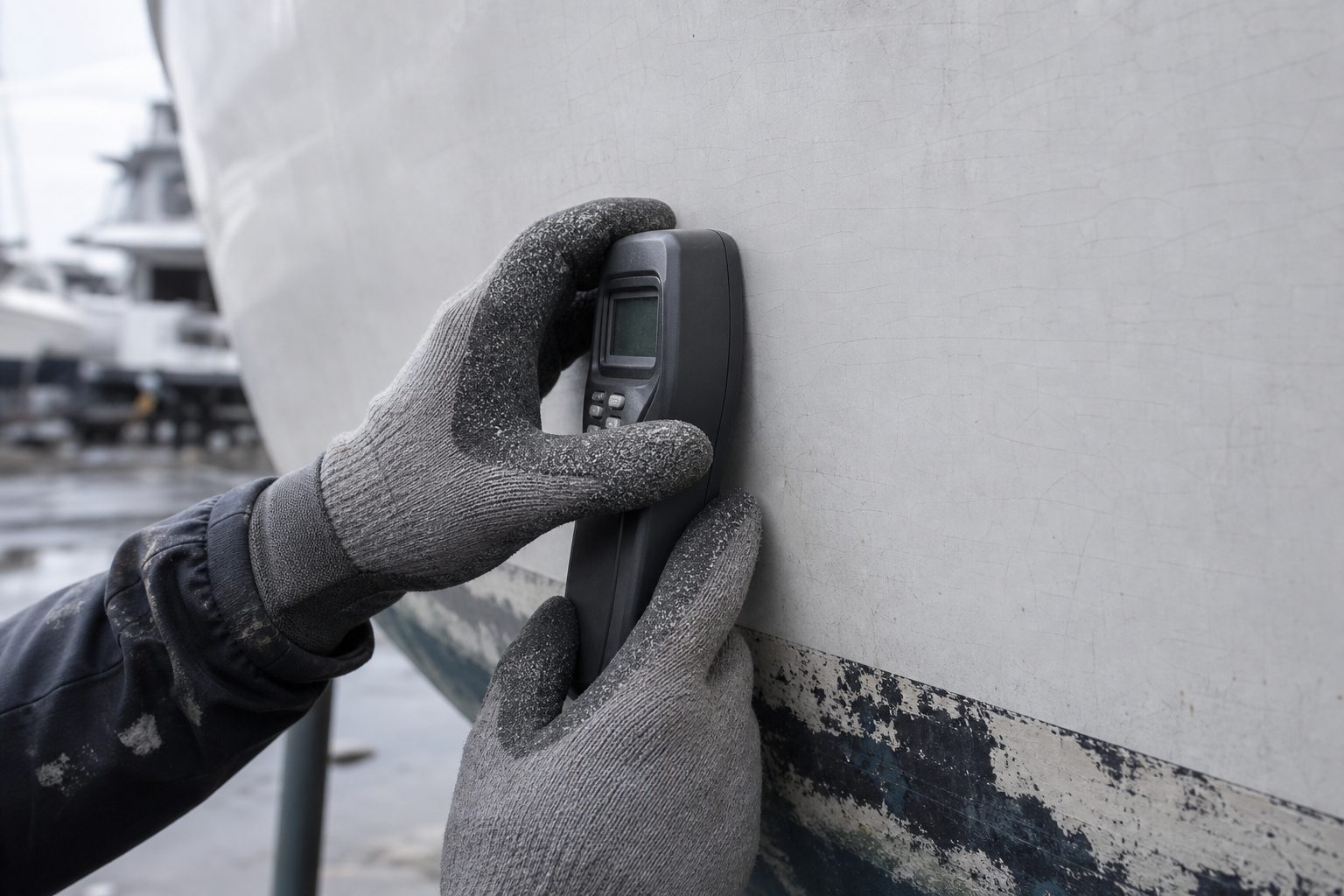
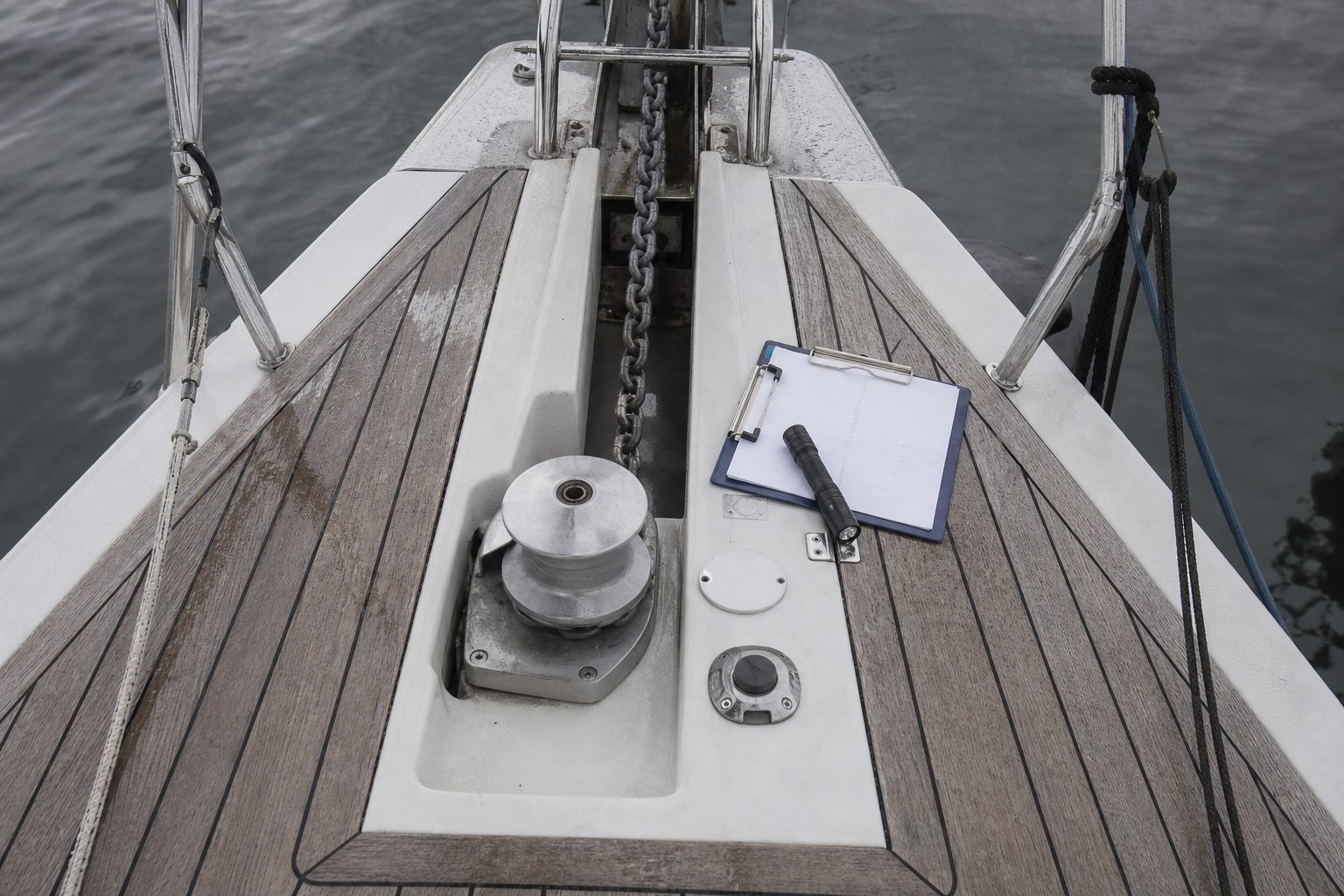
The vessel is examined afloat, and out of the water where a haul-out is arranged. The survey is non-destructive: joinery, headlining, insulation, tankage and fixed structure are not opened, and machinery is not dismantled.
What could and could not be reached on the day is recorded item by item, so the limits of the inspection are as clear as the findings themselves.
Insurers, brokers and loss adjusters, after an incident
Purpose
Establish the extent, and the likely cause, of the damage
Covers
The damaged area and everything downstream of it
You receive
An assessment of extent and cause, with a repair scope
What is examined
Scope of survey
Zone 01 of 04
Hull & structure
Gelcoat and laminate, keel and its fastenings, rudder, skeg and stern gear alignment, through-hull fittings and seacocks, with moisture readings taken across the hull.
BSpecimen finding, code B
Star-crack fracture through gelcoat, port topside forward of the shoulder. Laminate sound behind. Address within the season.
Zone 02 of 04
Machinery
Main engines and gearboxes, mountings and alignment, fuel system and filtration, raw-water and cooling circuits, exhaust, generator, and the service record against the hours shown.
ASpecimen finding, code A
Raw-water hose perished at the strainer and weeping under pressure. Renew before the vessel is next used.
Zone 03 of 04
Systems
Batteries and charging, AC and DC distribution, bonding and anodes, bilge pumping and its alarms, steering and its emergency provision, tankage and gas installation.
BSpecimen finding, code B
Shaft and rudder anodes wasted beyond half. Renew at the next lift.
Zone 04 of 04
Deck & safety
Deck moulding and core, hatches, windows and their seals, ground tackle and windlass, guardrails and stanchions, liferaft and lifejacket service dates, extinguishers and flares.
ASpecimen finding, code A
Liferaft service certificate expired. Re-certification required before the vessel goes to sea.
Zone 01 of 04
Hull & structure
Gelcoat and laminate, keel and its fastenings, rudder, skeg and stern gear alignment, through-hull fittings and seacocks, with moisture readings taken across the hull.
BSpecimen finding, code B
Star-crack fracture through gelcoat, port topside forward of the shoulder. Laminate sound behind. Address within the season.
Zone 02 of 04
Machinery
Main engines and gearboxes, mountings and alignment, fuel system and filtration, raw-water and cooling circuits, exhaust, generator, and the service record against the hours shown.
ASpecimen finding, code A
Raw-water hose perished at the strainer and weeping under pressure. Renew before the vessel is next used.
Zone 03 of 04
Systems
Batteries and charging, AC and DC distribution, bonding and anodes, bilge pumping and its alarms, steering and its emergency provision, tankage and gas installation.
BSpecimen finding, code B
Shaft and rudder anodes wasted beyond half. Renew at the next lift.
Zone 04 of 04
Deck & safety
Deck moulding and core, hatches, windows and their seals, ground tackle and windlass, guardrails and stanchions, liferaft and lifejacket service dates, extinguishers and flares.
ASpecimen finding, code A
Liferaft service certificate expired. Re-certification required before the vessel goes to sea.
Recommendation codes
Schedule of findings
Every finding in the report carries one of three codes. Nothing is left as a loose comment, and nothing is graded by how awkward it would be to raise.
That is the whole point of a coded schedule: your broker, your insurer or your yard can act on it without having to interpret it.
A
Address before the vessel is next used
Affects safety, watertight integrity, or the ability to get home. These are the items that stop a sale, or should.
B
Address within the current season
Sound today, but deteriorating, out of service interval, or cheaper to put right now than later.
C
Advisory, noted for the record
No action required. Recorded so that the next survey has a baseline to measure against.
What is in the report
Contents
The report is issued as a single document with a photographic record. Section 10, the coded schedule of findings, is the part your insurer, your broker or your surveyor at the far end will actually read.
Vessel particulars and identification
Scope, method and limitations
Hull, structure and laminate
Keel, rudder and stern gear
Machinery and propulsion
Electrical, fuel and gas systems
Bilge, steering and through-hulls
Deck, rig and ground tackle
Safety equipment and certification
Schedule of findings, coded A, B and C
Summary and recommendations
Photographic record
Vessel particulars
Instruction
Send the particulars and Capt. Rahim will come back with availability and a fee for that vessel.
Fees are quoted per vessel once particulars are received. They depend on length, hull material, location and whether a haul-out is arranged.